
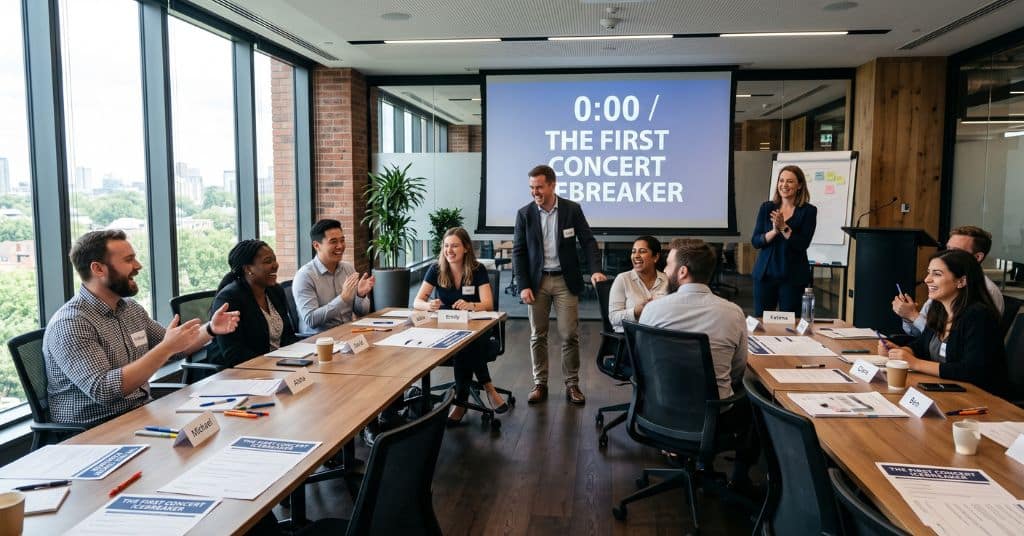
Rapport-building questions work best when they draw on a real memory instead of asking for an opinion. The First Concert Icebreaker does exactly that. You ask each person to name the first concert they ever attended. Then you ask them to name the best one. Two answers, maybe forty seconds per person, and the room changes.
This activity fits almost any meeting. Use it at a department meeting, a virtual all-hands, a new-hire orientation, or a leadership off-site. It needs no supplies and scales from six to 60 people. Music is the hook because almost everyone has a first concert story, and those stories are usually a little embarrassing. Someone in your group paid money to see a band they now refuse to admit they liked. By the end of this post, you will have the exact setup, the script, a list of backup prompts, and debrief questions that turn the laughter into something useful.
How to Set Up the First Concert Icebreaker Before Your Team Meeting
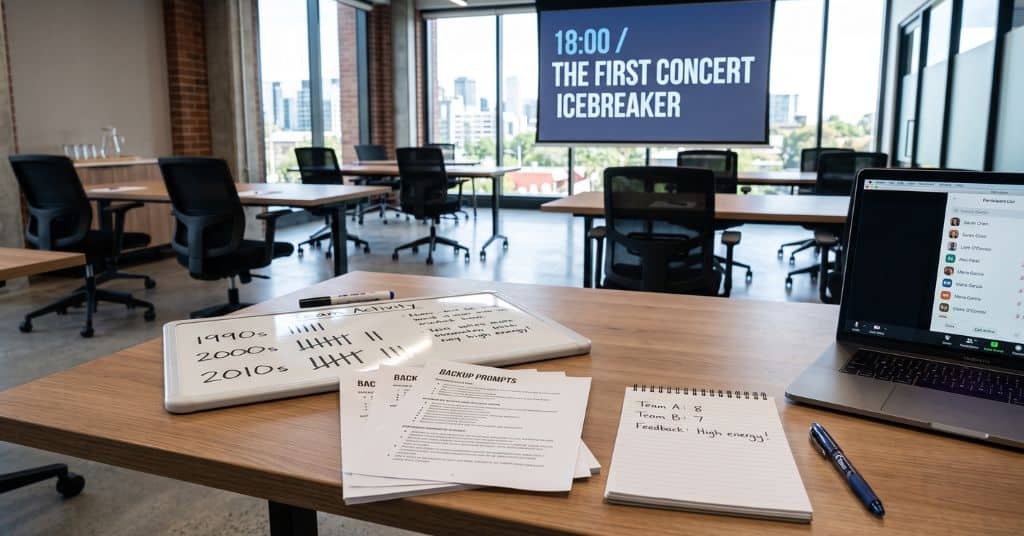
Most rapport-building questions need no materials, and this one is no exception. Prep takes about two minutes. However, a few small choices make the difference between a flat round and a loud one.
- Zero materials for an in-person round, though a whiteboard helps if you want to tally decades
- Two minutes of prep to decide the order and to pick your own example
- Six to sixty participants, split into groups of five or six if you go above twenty
- About 40 seconds per person, so budget eight minutes for a group of twelve
- A chat window for virtual meetings, where people can drop artist names as they go
Decide your own answer first. Going first sets the tone, and a facilitator who hedges will get hedging back. Additionally, think about whether your group skews young or old. If the room spans four decades, the age spread becomes half the fun, so lean into it rather than smoothing it over.
Two variations work well. For a shorter meeting, ask only for the first concert and skip the best one. At a longer off-site, add a third question about the concert they most regret missing. Instead of policing the format, let people tell a sentence of a story if they want one.
Step-by-Step Instructions for Leading the First Concert Icebreaker
Step 1: Frame the two questions.
Tell the group you are going to ask two quick questions and that nobody has to defend their taste in music. Then read both questions out loud so people can think while others answer. First concert ever, and best concert ever. Some people will freeze because they cannot remember whether the church talent show counts. Give them one of these backup prompts if they stall.
- How old were you at your first concert, and who took you there?
- What was the first album you bought with your own money?
- Name a band you saw live that you would never admit to now
- If you could see one artist who no longer tours, who would it be?
- Which concert had the worst seats and the best time?
- Describe the merch you still own from a show you attended
- Who is the one artist you have seen more than twice?
- Suppose your life had a walk-on song, what would it be?
- Where was the smallest venue you have ever seen a band play?
- List the three songs you would put on a road trip playlist for this team
Step 2: Answer first yourself.
Next, give your own two answers in under 30 seconds. Keep it specific, because a vague answer teaches the group to be vague. Name the year, the venue, and one detail. For instance, my first concert was a county fair show where the sound cut out twice. Once you model brevity, the round moves fast.
Step 3: Move through the group in a set order.
Then work through the group in a fixed order so nobody sits in suspense wondering when their turn comes. Around a table, go clockwise. In a virtual meeting, read names from your participant list in order and say the next two names in advance. As a result, people stop bracing and start listening.
Step 4: Let the reactions happen.
Somebody will name a band, and three people will gasp. Do not talk over that. These reactions are the entire point, because rapport comes from the recognition rather than from the answer itself. Allow five or ten seconds of cross-talk, then move on. Meanwhile, jot down any pairing you notice, such as two people who saw the same tour in different cities.
Step 5: Close with one pattern you noticed.
Finally, name one thing the answers had in common before you move to the agenda. Maybe six people named a show from the same decade. Perhaps two people attended the same festival. Calling out the pattern takes ten seconds and gives the activity a landing point instead of a fade-out.
Why This Beats Most Rapport Building Questions
Most rapport-building questions ask people to perform. Think of the two-truths format or the fun-fact request, where a participant has to invent something interesting about themselves on the spot. Concerts are different, because the answer already exists in memory. Nobody has to be clever. Therefore, the quiet people in the room participate at the same rate as the talkers, which is unusual for an icebreaker.
Other activities do other jobs better. The Marshmallow Challenge is terrific for a longer off-site, although it needs supplies and a half hour. For a faster read on how the team is actually doing, the One-Word Pulse gets there in ninety seconds. And if your group needs to solve something rather than warm up, Reverse Brainstorming turns the same energy toward a real problem. We have run all of these with client groups at The Leaders Institute, and the concert round is the one facilitators keep in their back pocket.
Debrief Questions to Drive Real Learning After the First Concert Icebreaker
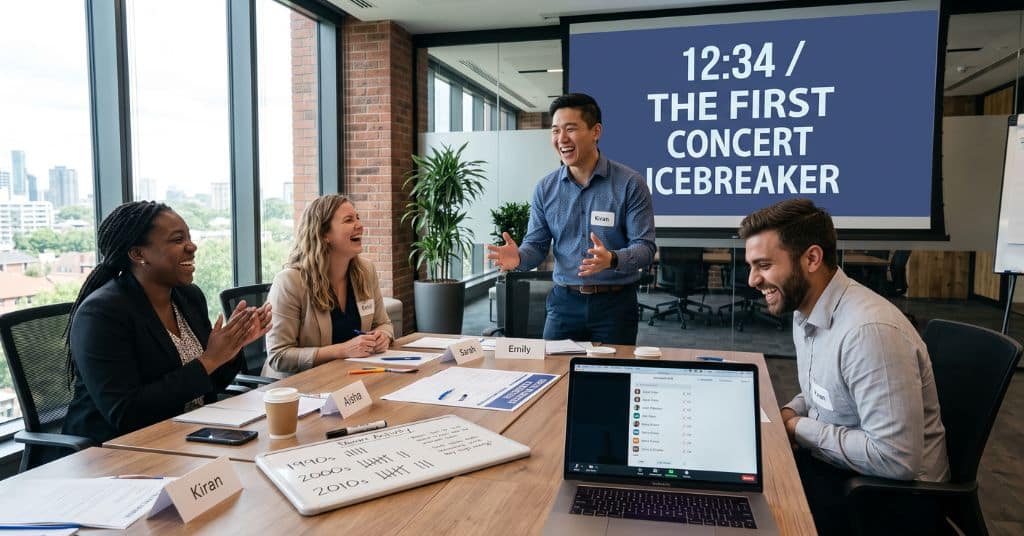
In most cases, the cross-talk during the round does the debrief work for you. However, if the meeting has a theme about listening, assumptions, or getting to know a new team, a two-minute debrief converts the laughter into a point people remember. Keep it optional. Nobody needs a lesson attached to every warm-up.
Ask one or two of these instead of all of them. Also, give people a few seconds to think before you call on anyone.
A Few Questions to Ask After the First Concert Icebreaker
- Who surprised you, and what had you assumed about them before?
- What did you learn about someone that a status meeting would never have surfaced?
- Where else on this team are we making assumptions based on almost no information?
- How many people turned out to share a favorite artist with you?
The Takeaway
A concert memory is a low-stakes way to find out that the person you have emailed for two years saw the same band you did in 1998. That recognition is what makes the rest of the meeting easier. Consequently, the best rapport-building questions are usually the ones that ask for a memory rather than an opinion.