
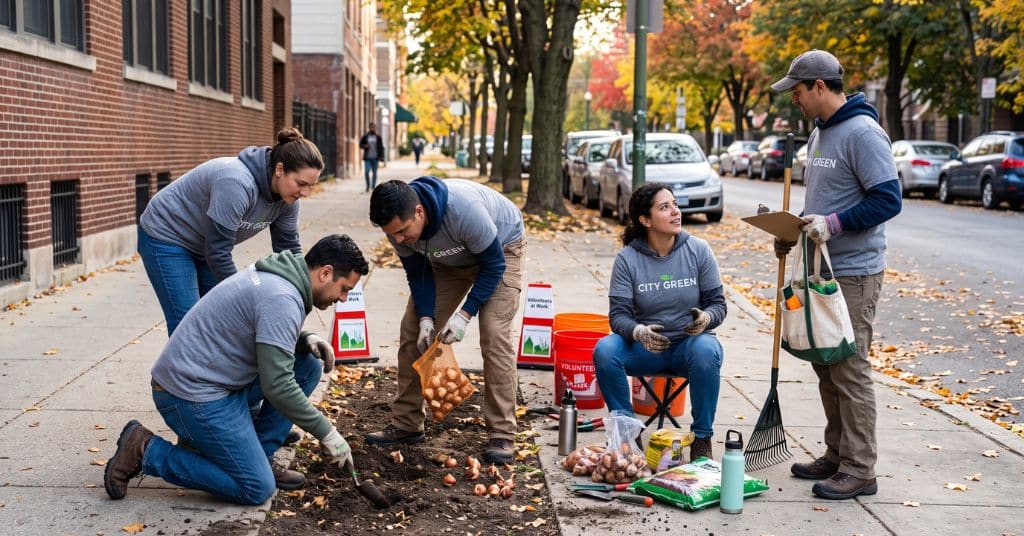
The best Make a Difference Day ideas usually come from people who just looked around and noticed a need. In 2011, more than 600 volunteers in Jersey City planted 18,000 daffodil and tulip bulbs at 80 sites across town. The next spring, the city bloomed yellow, red, and orange. That project won a $10,000 award, and it didn’t require a single fancy tool.
So when is Make a Difference Day this year? In 2026, the fourth Saturday of October lands on the 24th. It’s one of the few holidays built entirely around doing something useful. So if your team wants to take part, you have lots of options. In this post, you’ll see where the day came from and what its award-winning projects can teach you. You will also get a set of team volunteer ideas used across the team-building industry. Finally, you’ll learn how to plan a project the charity will actually thank you for.
Make a Difference Day History and Its Award-Winning Ideas
Make a Difference Day started as a newspaper challenge, and it grew into one of the biggest service days in America. Its history is also a great source of project ideas.
USA WEEKEND Magazine created the day in 1992. The magazine ran inside hundreds of Sunday newspapers. So instead of just writing about volunteers, the editors asked readers to become volunteers on the same Saturday. Points of Light joined as a partner. Then, in 1994, Newman’s Own signed on. Paul Newman’s company funded $10,000 in awards for the best projects each year. Over 18 years, those prizes added up to more than $1.8 million.
USA WEEKEND printed its final issue in 2014, and the national awards faded with it. However, the day itself never went away. Cities, colleges, and churches kept running their own projects every fourth Saturday in October.
What the Award Winners Actually Did
Most of the winning projects were small and a little scrappy. For example, a Girl Scout troop in Madisonville, Kentucky, used cookie money to buy and decorate 450 greeting cards. Then the girls hand-delivered every card to nursing home residents.
In Salisbury, North Carolina, more than 85 volunteers painted houses, installed fences, and planted trees. The crew included the mayor and a college track team. Meanwhile, about 160 volunteers in San Jose, most of them under 18, cleaned up their neighborhood. They hauled away 48 bags of trash and painted over 708 graffiti tags.
Some winners simply refused to stop. Mary Vail of Las Vegas was honored for an annual food drive she started years earlier. After 13 years, her drive had gathered 22.3 tons of groceries and toiletries.
None of those groups had a big budget. Instead, each one had a clear task, a clear finish line, and a reason to show up. That’s the same formula that works for a work team today.
Make a Difference Day Ideas for Teams
The right idea depends on where your people work and how much time you have. Here are the volunteer ideas that teams across the industry use most, grouped by situation.
Hands-on community shifts. This is the classic version of the day. Your team spends a morning at a food bank, a park, or a Habitat site. For instance, United Way of Marathon County in Wisconsin runs a leaf-raking event every year around Make a Difference Day. Volunteers show up with rakes and trash bags and clear yards for neighbors who can’t do the work alone. As one organizer put it, “We have a lot of homeowners who are elderly or disabled.” The work is simple, and the team sees the result before lunch.
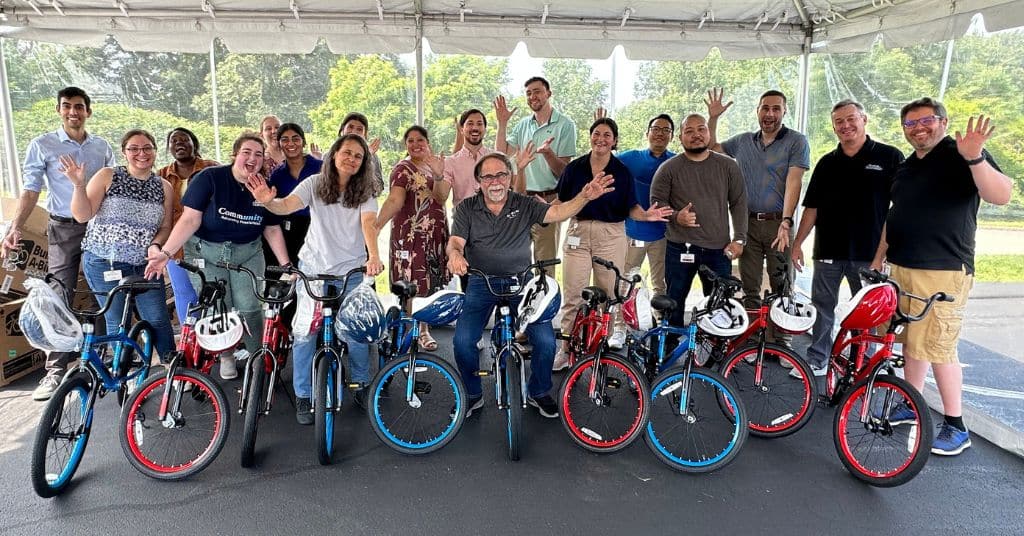
In-office charity team building. Some teams can’t leave the building, and Saturday shifts are hard to fill. In that case, bring the volunteer project into the conference room with charity team-building events. Teams build bikes for kids, pack meals, assemble hygiene kits, or stuff teddy bears for children in foster care. Each one combines a team challenge with a donation at the end. Build-A-Bike, launched by The Leaders Institute in 2005, was one of the first, and the idea spread across the whole industry. Today, nearly every major team-building company offers some version of a give-back build.
Donation drives with a twist. A plain collection box in the break room tends to sit half-empty. Instead, turn the drive into a contest between departments. Then let the winning team deliver the donations in person on Make a Difference Day. You can also add a company match to double the impact.
Make a Difference Day Ideas for Remote Teams and Small Budgets
Not every team shares an office, and not every team has a budget. Fortunately, some of the best ideas need neither.
Remote and hybrid options. Distributed teams can still take part. For example, people can write letters to deployed service members, mentor students over video, or do pro bono work for a local nonprofit. Skills-based volunteering is especially valuable. A charity may not need ten more people painting a fence. However, it may badly need someone to fix its website or its donor spreadsheet.
Book and supply drives. Ask the team to collect children’s books or school supplies for one local school. This idea scales better than you might expect. Neha Gupta of Yardley, Pennsylvania, started her own nonprofit at age 15. Her Make a Difference Day project stocked a local school’s library with over 3,000 books. If a teenager can pull that off, a department of twenty adults can fill a few bookshelves.
Acts of kindness challenges. This is the lightest option, and it works for any team size. Everyone commits to three small acts of kindness that week. Then the team shares stories in a group chat on Monday. It costs nothing, but it often sparks a bigger project for next year.
How to Plan a Make a Difference Day Project the Charity Wants
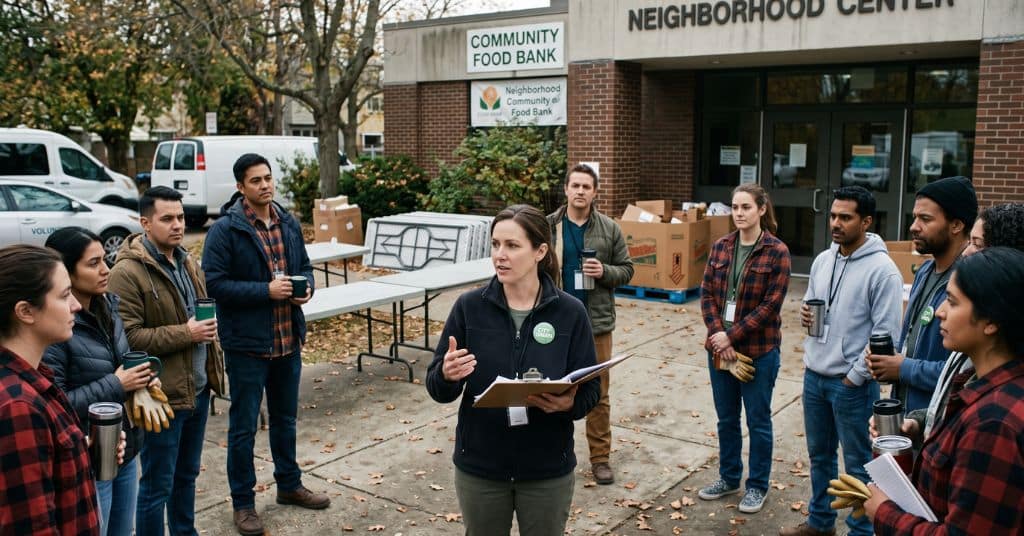
A good volunteer day starts with the charity’s needs, not your team’s calendar. If you skip that step, your team can become a burden instead of a help.
That sounds harsh, but nonprofit leaders say it plainly. In a 2015 Boston Globe story, a YMCA executive described what happens when planning goes wrong. “Oftentimes a van shows up, a bunch of people get out with no real understanding of our cause.” Her staff ended up arguing over whose problem the group was. Another leader described “the proverbial wall being painted over and over and over again.” Several corporate groups had painted the same wall in the same week.
So the fix is to plan with the charity, not for it. Here’s a simple two-week game plan.
- Two weeks out. Call the nonprofit and ask, “What do you need most right now?” Then ask how many volunteers they can actually handle. Some sites can only use 10 to 15 people at a time.
- Ten days out. Pick a project leader for each small group. That person learns the details and answers questions on the day.
- One week out. Send the dress code, address, and parking details. Mention closed-toe shoes, sunscreen, and bug spray for outdoor work.
- Two days out. Send a reminder in writing and mention it in person at a team meeting.
- The day after. Share photos and a short recap of what the team accomplished.
Copy the Project Leader Model
The University of Arkansas runs one of the larger campus Make a Difference Day events. In 2025, 424 students served 1,350 hours across 27 projects in Northwest Arkansas. They sorted thrift store donations, packaged diapers for families, and cleaned up a watershed.
The secret wasn’t the headcount, though. The planning board started in the spring and trained 24 student project leaders. Each leader became the single point of contact for one nonprofit. So when volunteers arrived, the charity already knew who was coming and what they would do.
Your team can borrow that exact model on a smaller scale. One leader per site keeps the charity happy and the volunteers busy.
It also pays off back at the office. In an older Deloitte survey of millennial workers, 56% of frequent volunteers called their company culture very positive. Only 28% of people who rarely or never volunteered said the same. Loyalty showed a similar gap, at 52% versus 33%.
Make Your Team’s Make a Difference Day Count
Make a Difference Day began as a simple dare from a Sunday magazine. Pick a need, and help on the same day as everyone else. Over the years, that simple request led to planted bulbs, painted houses, and hundreds of greeting cards. The best projects were small, specific, and planned around a real need.
Your team doesn’t need a huge budget to take part. Just pick one idea that fits your people and call the charity early. Then give each group a leader and share the results when you’re done. If Saturday won’t work, hold your project on Friday instead. The charity won’t mind, and your team will still feel the difference.
You can do the same!