
The Human Bingo Icebreaker
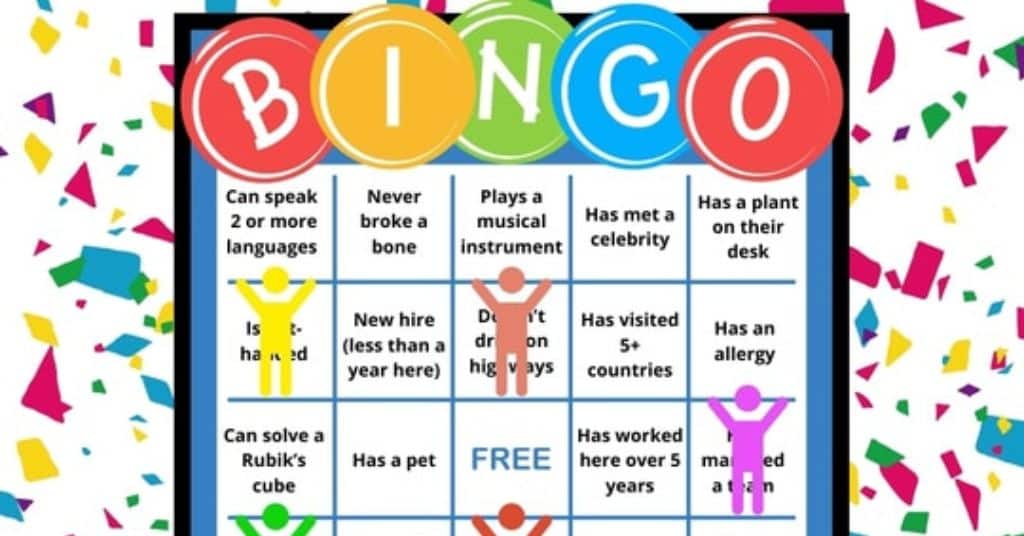
BINGO! The word everyone loves to scream but hates to hear when their Bingo board is halfway filled with possibilities. Bingo is an age-old game of chance, putting chips on a grid card that line up with numbers called by an announcer. However, this isn’t your regular game of Bingo that matches numbers with squares.
This is Human Bingo, an effective networking icebreaker. In this version, participants mingle to find colleagues matching specific, professional, or personal traits on a 5×5 grid. The standard is 5×5, but if you want the game to last a little longer, feel free to make it into any odd-numbered grid like 7×7 so you still have a free space in the middle. They engage with their colleagues, all while signing squares to complete lines. It breaks the ice, builds trust, and fosters team cohesion in new teams or workshop settings.
For example, one coworker would walk around with a bingo card and would need to find someone who matches one of their squares. Let’s say one square reads, “Has been out of the country.” Now that person has to walk around and talk to people until they find out who has been out of the country. Once they do that, the person they found has to sign their name in the square, and that marks off the spot.
How to Organize Human Bingo
Here is the breakdown of human bingo. It’s pretty much the same as regular bingo, but with no announcer and signatures. If you haven’t played regular bingo, don’t worry; this is a step by step to make sure your icebreaker is set up correctly for optimal fun!
- Create the Grid: Use a 5×5 (25 squares) grid filled with diverse, fun, and work-appropriate prompts. These are very easy to make in an editing app like Canva or even PowerPoint. However, there are quite a few online premade sheets, like on Etsy.
- Set Rules: Participants move around the room to find people who match the descriptions, getting signatures to fill their cards.
- Winning Conditions: The first to fill a horizontal, vertical, or diagonal line (or a full blackout) shouts “Bingo!”.
- Duration: Typically runs for 15–30 minutes, acting as a great warm-up for workshops, meetings, or team outings.
Professional Human Bingo Prompts & Examples
Professional and Career-Focused Prompts
“Has worked here for over 5 years”
“Can speak 2+ languages”
“Has managed a team”
“Switched careers”
“New hire (less than a year here)”
“Has a plant on their desk”
“Prefers paper notes over digital”
“Is an Excel whiz”
Hobbies and Interests Prompts

“Has run a marathon”
“Loves to cook”
“Plays a musical instrument”
“Has visited 5+ countries”
“Has gone camping”
“Enjoys board games or puzzles”
“Can solve a Rubik’s Cube”
“Plays a sport”
Random and Quirky Prompts
“Has met a celebrity”
“Never broken a bone”
“Owns a pet”
“Is left-handed”
“Has an allergy”
“Likes pineapples on pizza”
“Doesn’t drive on the highway”
“Been to a casino”
Key Benefits
- Strengthens Communication: Helps team members learn new things about each other, fostering a more cohesive environment.
- Low-Pressure Networking: Encourages introverts and extroverts alike to connect through a structured, fun activity.
- Builds Trust: Encourages sharing, which contributes to a more open workplace culture.
Tips for Success
- Ensure the questions encourage genuine, sometimes surprising, conversation rather than just quick, shallow answers.
- Offer small, fun prizes for the winners.
- Make sure the activity feels inclusive and engaging for everyone, whether a team is newly formed or long-standing
Human Bingo is a great way to get your team talking amongst themselves and getting to know each other better. Not only does this force people to talk outside of their normal circles, but it promotes communicating and strategizing. Working to get the squares checked off before your coworkers have a chance to get theirs checked off makes for a great way to have a fun competition.
Human Bingo is especially great for new teams and company shifts where new departments are working together. As members build bonds, they become more comfortable speaking and engaging with their coworkers. For an interesting twist, make two or three different bingo cards. That way, everyone will end up talking to even more people- people looking for their bingo and themselves trying to get a bingo.